SkyForce Course
Introduction to Advanced Air Mobility (AAM)
Advanced Air Mobility (AAM) marks a transformative evolution in the aerospace sector, extending beyond conventional aviation models to incorporate innovative transportation methods and technologies. AAM encompasses a range of systems, including unmanned aerial vehicles (UAVs), electric vertical takeoff and landing (eVTOL) aircraft, and other novel aerial technologies designed to operate in urban, suburban, and rural environments.

- Who it's for: anyone starting a career, business or investment in electric aviation, drones or air cargo. No aviation background is needed.
- How it works: read each chapter, then test yourself with the quiz at the end. Your progress is saved on this device.
Start Here
Top AAM Companies and Their Aircraft
As of October 2026, no Western eVTOL holds a full FAA or EASA type certificate yet; BETA Technologies is in 7 of the FAA's 8 eVTOL Integration Pilot Program projects, and China's EHang and AutoFlight hold the only full civil eVTOL certificates.

Categories used below:
- Lift + cruise: separate rotors lift the aircraft straight up; a pusher propeller and wing carry it forward.
- Vectored thrust: the same propellers tilt from lifting to pushing forward.
- Multicopter: many fixed rotors, like a large drone, with no wing.
- eCTOL: electric conventional takeoff and landing from a runway.
- Hybrid VTOL: vertical takeoff with an onboard engine or generator for longer range.
- eSTOL: electric short takeoff and landing from very short strips.
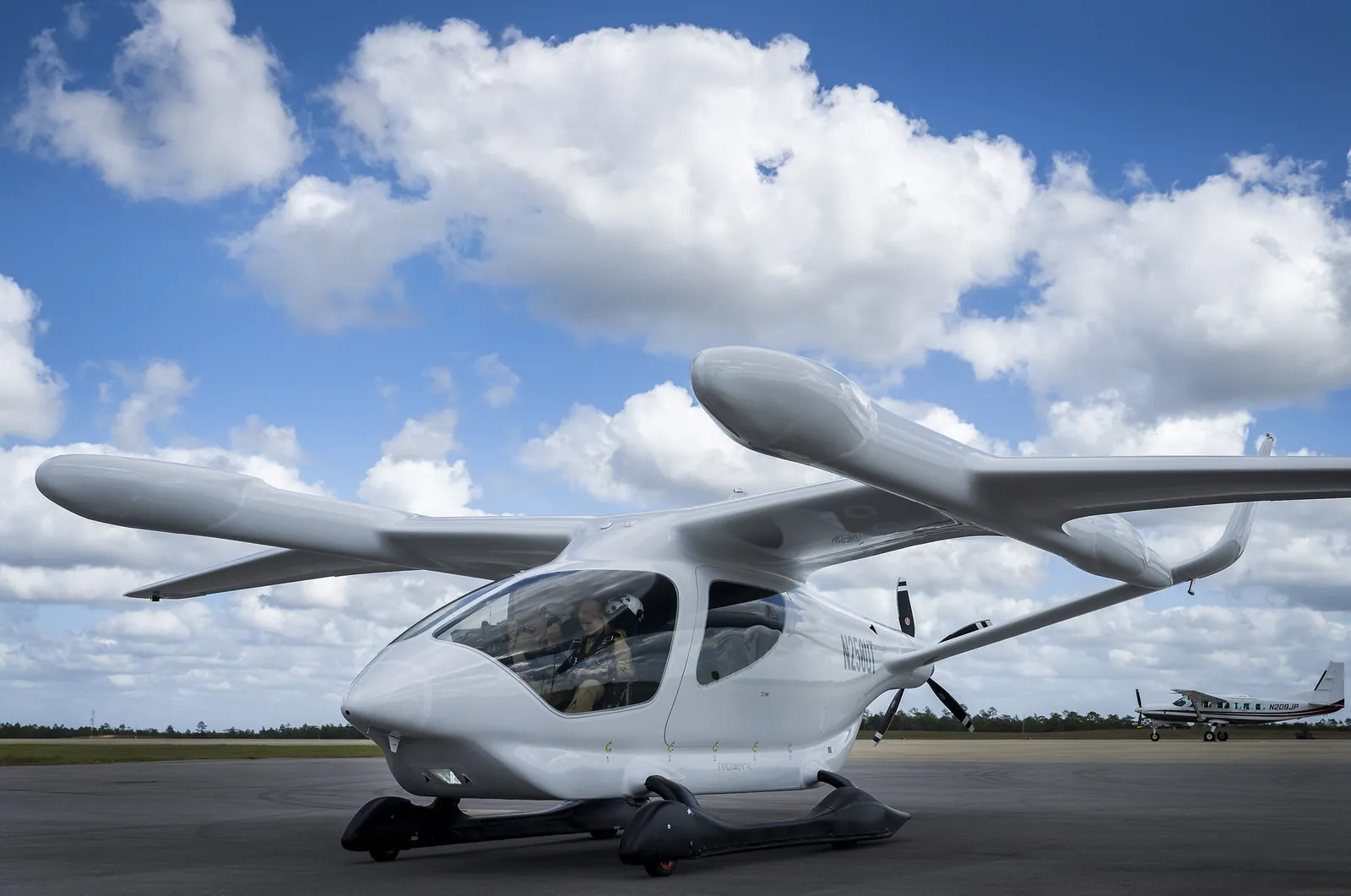
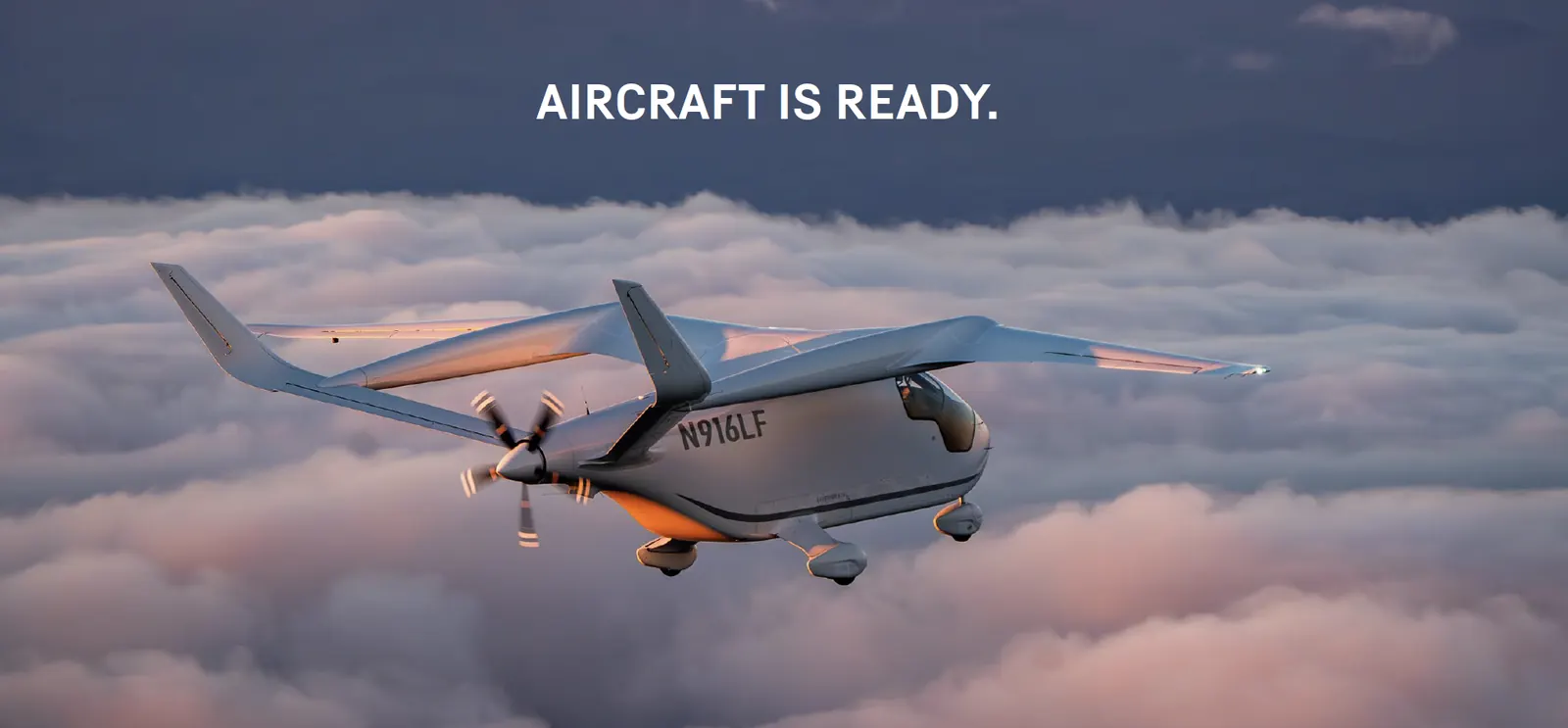
BETA Technologies (USA)
Joby Aviation (USA)
Archer Aviation (USA)
Wisk Aero (USA)
Eve Air Mobility (Brazil, Embraer)
Vertical Aerospace (UK)
EHang (China)
AutoFlight (China)
Volocopter (Germany)
Electra.aero (USA)
Elroy Air (USA)
Pipistrel / Textron (Slovenia/USA)
Heart Aerospace (USA/Sweden)
Horizon Aircraft (Canada)
Jetson (Sweden/USA)
Lessons from programs that stopped: Lilium shut down in 2025 and sold its patents to Archer; Overair closed in 2025; Hyundai's Supernal and Airbus CityAirbus NextGen are paused. Funding, battery maturity and certification cost decide who reaches market.
Chapter 1
Introduction to Advanced Air Mobility
AAM moves people and goods by air on demand, using quieter, cleaner aircraft that can fly from cities, suburbs and remote areas without a traditional airport.

What Makes AAM Different
Traditional aviation flies fixed routes between large airports. AAM is built around 3 ideas:
- Sustainability: electric, hybrid and hydrogen power instead of jet fuel.
- Automation: aircraft that need less pilot workload, and some that fly with no pilot on board.
- Flexibility: on-demand trips from small sites such as rooftops, airstrips and landing pads.
Building AAM takes 3 disciplines working together:
- Aerospace engineering to design and build safe, efficient aircraft.
- Robotics to make aircraft fly and land on their own with precision.
- Artificial intelligence (AI) to plan flights, manage traffic and predict maintenance before parts fail.
The 3 Building Blocks of AAM
- 1Aircraft: from small delivery drones to 5-seat air taxis and cargo planes. Better batteries, motors and self-flying software made them possible.
- 2Vertiports: the airports of AAM, meaning landing pads where aircraft take off, land, load and recharge. Where they are placed decides how useful the network is.
- 3Air traffic management: the systems that keep AAM aircraft safely separated from each other and from airliners, with real-time communication and, increasingly, automated decisions.
Why It Matters
- Less traffic: flying over roads cuts trips that take an hour by car to minutes.
- Faster emergency response: medical teams, organs and supplies arrive faster when every minute counts.
- Lower emissions: electric and hybrid aircraft produce far less carbon than fuel-burning helicopters and planes.
- Rural access: remote towns and mine sites with poor roads gain a reliable air link.
- New jobs and businesses: from building aircraft to running vertiports and charging networks.
Real-World Example
Cities such as Dubai, Abu Dhabi, Los Angeles and Singapore are preparing air taxi routes and vertiports. Two challenges stand in the way everywhere: building enough vertiports and charging stations, and updating aviation rules so these new aircraft can fly safely in crowded airspace.
Key takeaway
AAM combines new aircraft, vertiports and air traffic management to make air travel cleaner, faster and available far beyond major airports.
Action step
Pick 1 city or region you care about and list where a vertiport could go, what it would carry, and what would stop it today.
Chapter 1 Quiz
Test Yourself
1What does AAM include?
2What are the 3 building blocks of AAM?
3What is a vertiport?
4What are 2 major challenges for AAM today?
Chapter 2
Overview of the AAM Industry
The AAM industry rests on 4 sectors, manufacturing, operations, infrastructure and regulation, and the companies that succeed work across all 4.

How the Industry Is Organized
- Manufacturing: designs and builds the aircraft, batteries, motors and avionics.
- Operations: flies the aircraft, maintains them and serves customers.
- Infrastructure: vertiports, charging and fueling stations, communication networks and traffic systems.
- Regulation: the FAA in the United States, EASA in Europe and national authorities set safety, certification and operating rules.
Aircraft Manufacturing
Building an electric aircraft blends aerospace craftsmanship with electric-vehicle technology, and makers are scaling from prototypes to production lines.
What goes into an AAM aircraft:
- Composite airframe: wings and fuselage made from carbon fiber layers laid into molds and cured, making them light and strong.
- Battery packs: hundreds of cells assembled into packs with cooling, monitoring and fire protection.
- Electric motors and propellers: compact, powerful motors that drive each rotor.
- Wiring and high-voltage systems: harnesses that carry power and data safely through the aircraft.
- Fly-by-wire flight controls and avionics: computers that turn pilot or autopilot commands into motor and surface movements.
How production works:
- 1Design and digital twin: engineers model and test the aircraft virtually before building it.
- 2Parts and sub-assemblies: composite parts, battery packs, motors and harnesses are built and tested.
- 3Final assembly: the airframe, systems and wiring come together on the line.
- 4Quality inspection: every step is checked and recorded, because regulators require full traceability.
- 5Ground and flight testing: each aircraft is tested before delivery.
Certification on the factory side: the FAA approves the design (a type certificate) and, separately, the factory's ability to build it consistently (a production certificate).
Jobs on the floor: composite technicians, battery and electrical assemblers, quality inspectors, test technicians and production planners. Makers such as BETA in Vermont and Electra, which plans an $850M factory in Ohio, are hiring at scale, often from workers who are new to aerospace.
Autonomous Drones

Uncrewed aircraft are already the most widely used part of AAM, flying deliveries, inspections and cargo every day.
Small delivery drone
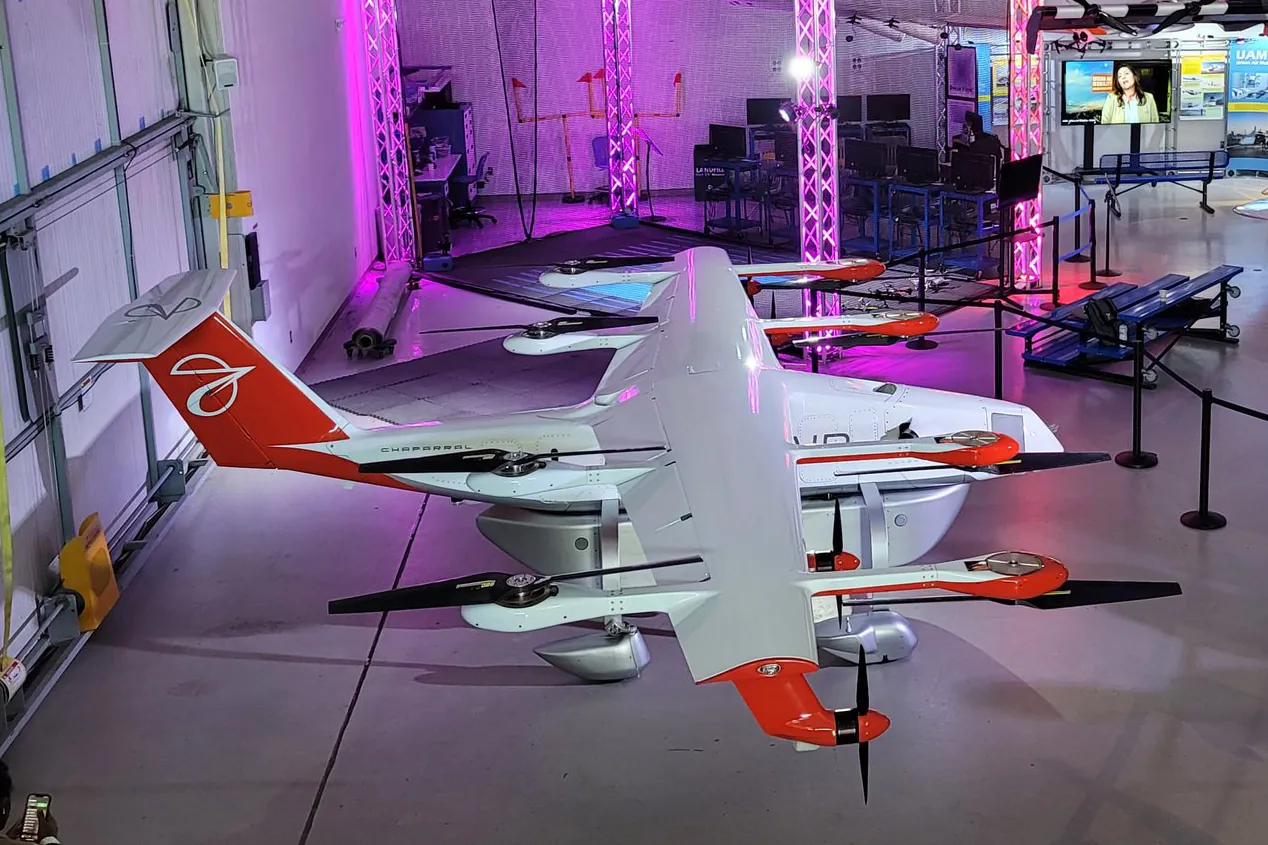
Heavy cargo VTOL
Heavy cargo VTOL
Heavy cargo eVTOL
Autonomous air taxi
How they fly themselves: GPS and sensors fix their position, onboard computers follow a planned route and avoid obstacles, and a remote operator supervises one or several aircraft from the ground.
What's holding them back: in the US, routine flights beyond the operator's line of sight still need special approval, because the FAA's rule for this (Part 108) is not yet final.
Key Players
- Aircraft makers: BETA, Joby, Archer, Eve (Embraer), Vertical, EHang, AutoFlight, Electra, Elroy Air, Pipistrel.
- Established aerospace: Boeing, Airbus, Embraer, Textron and GE Aerospace, often as investors and partners.
- Operators and customers: UPS, Bristow, Air New Zealand, United Therapeutics, Walmart.
- Regulators: FAA, EASA, the UAE's GCAA and China's CAAC.
Current State and Outlook
- Progress: aircraft are flying certification tests, and pilot programs in 2026 put eVTOLs into real US airspace.
- Challenges: battery limits, certification time and cost, and public trust on noise, safety and privacy.
- Money: large investments from aerospace giants, public listings and government programs, alongside several high-profile shutdowns.
Key takeaway
AAM is moving from prototypes to production; manufacturing jobs and autonomous cargo are growing fastest right now.
Action step
Pick 1 aircraft maker and 1 drone company from this chapter and find out where they build or fly and what jobs they are posting.
Chapter 2 Quiz
Test Yourself
1What are the 4 sectors of the AAM industry?
2What is a composite airframe made from?
3What does a production certificate approve?
4How does a Zipline P2 deliver a package?
Chapter 3
Basics of AAM
AAM runs on 3 core technologies, electric propulsion, autonomous navigation and communication systems, and it only works if regulators can certify the aircraft and fit them safely into shared airspace.

Core Technologies
- Electric propulsion: electric motors replace combustion engines, making flight quieter, cleaner and cheaper to run. Many aircraft use several small motors, so losing 1 does not bring the aircraft down.
- Autonomous navigation: sensors, GPS and software guide the aircraft, avoid obstacles and choose efficient routes, reducing human error.
- Communication systems: aircraft, control centers and other airspace users share position and intent in real time.
Enabling Technologies
- Batteries: energy per kilogram limits range and payload today. Better cells and battery management keep extending both.
- Hybrid and hydrogen power: a small engine or fuel cell generates electricity in flight, adding range where batteries alone fall short.
- AI and machine learning: predict maintenance needs, optimize routes and support pilots' decisions.
Regulation and Safety
- Airspace integration: new traffic systems must handle vertical takeoffs and low-altitude flights alongside airliners and helicopters.
- Aircraft certification: every new design must prove it meets safety standards. Many rules were written for planes and helicopters, so regulators are adapting them.
- Fail-safe design: backup motors, batteries and flight computers, plus parachutes on some aircraft, handle failures and bad weather.
- Cybersecurity: connected, software-flown aircraft must be protected from hacking.
Key takeaway
Electric power, self-flying software and constant communication make AAM possible; certification and airspace rules decide how fast it scales.
Action step
Choose 1 aircraft from the Top AAM Companies table and find out how it is powered, how it is flown and where it is in certification.
Chapter 3 Quiz
Test Yourself
1Which is NOT a core AAM technology?
2Why do many eVTOLs use several small motors?
3What is a major regulatory challenge for AAM?
Chapter 4
Opportunities in AAM
AAM needs people in every role from the hangar floor to the boardroom, and most of those jobs did not exist 10 years ago.

Where the Work Is
- Aircraft design and engineering: aerodynamics, lightweight composites, electric motors and flight software.
- Manufacturing: composite layup, battery and wiring assembly, quality inspection.
- Flight operations: eVTOL and powered-lift pilots, remote pilots for drones, dispatchers.
- Maintenance: technicians for electric motors, high-voltage batteries and avionics.
- Infrastructure: vertiport planning and operations, charging station installation and service.
- Air traffic management: systems that manage low-altitude traffic, and the people who run them.
- Policy and regulation: certification, safety rules, community and city planning.
Skills That Matter
- Technical: engineering, electrical systems, data analysis and simulation tools.
- Regulatory: knowing the FAA and EASA rules that govern your role.
- Sustainability: designing cleaner operations and infrastructure.
- People skills: communication, teamwork and problem solving across disciplines.
How to Get In
- Certified training: hands-on, industry-certified courses such as SkyForce's tracks for pilots, drone operators, manufacturing, maintenance, charging and hydrogen systems.
- Licenses: FAA Part 107 for commercial drone pilots, and A&P certification for aircraft maintenance technicians.
- Degrees: aerospace, electrical or software engineering, or unmanned aircraft systems programs.
- Experience: internships, apprenticeships and hands-on projects.
- Network: professional groups, workshops and industry conferences.
Key takeaway
AAM careers span engineering, manufacturing, flying, maintenance, infrastructure and policy, and certified hands-on training is the fastest way in.
Action step
Pick the 2 roles in this chapter that interest you most and list the license or certificate each one needs.
Chapter 4 Quiz
Test Yourself
1Which FAA certificate do commercial drone pilots need?
2Which role installs and services aircraft chargers?
3Why does continuous learning matter in AAM?
Chapter 5
Industry Leaders in AAM
AAM leaders win by proving their aircraft in public, partnering with established aerospace companies, and working closely with regulators.

Startups Setting the Pace
- BETA Technologies: flew its ALIA aircraft across the US, offered both a vertical takeoff and a runway version, and is in 7 of the FAA's 8 eVTOL pilot projects in 2026.
- Joby Aviation: built its own manufacturing and bought Blade's passenger business to own the customer, with Dubai as its first launch city.
- Archer Aviation: secured early approval in the UAE and grew by acquiring patents, an airport and Boeing's Wisk.
- Electra.aero and Elroy Air: focus on hybrid power for longer range and cargo.
- Zipline and Wing: proved drone delivery at scale, with millions of flights.
Established Aerospace Partners
- GE Aerospace: invested $300M in BETA and co-develops hybrid power.
- Boeing: backed Wisk's autonomous air taxi, now moving to Archer.
- Embraer: created Eve Air Mobility.
- Textron: owns Pipistrel, maker of the first certified electric aircraft.
Regulators Shaping the Field
- FAA: wrote the first powered-lift pilot and training rules (2024) and launched the eVTOL Integration Pilot Program (2026).
- EASA: sets European certification standards for eVTOLs.
- UAE GCAA and China's CAAC: issued early approvals that let operations start abroad first.
What Leaders Have in Common
- They show real flights early and often.
- They partner with big names in aerospace, logistics and medicine.
- They plan for certification from day one.
- They focus on a clear first market, such as cargo, medical transport or one launch city.
Key takeaway
Leadership in AAM comes from proof, partnerships and patience with certification.
Action step
Follow 3 companies from this chapter on LinkedIn and note the milestones they announce over the next month.
Chapter 5 Quiz
Test Yourself
1Which company is in 7 of the FAA's 8 eVTOL pilot projects?
2Which aerospace company invested $300M in BETA?
3What do AAM leaders have in common?
Chapter 6
Creating a Business in AAM
You don't have to build an aircraft to build an AAM business: training, charging, vertiports, maintenance, software and cargo services all serve the same growing market.

Business Ideas Around the Aircraft
- Training and certification: pilots, technicians, drone operators and charging installers.
- Infrastructure: vertiports, landing pads and charging or hydrogen fueling stations.
- Maintenance and repair: service centers for electric motors, batteries and avionics.
- Air cargo and delivery: medical supplies, parts, samples and high-value goods.
- Software and data: flight planning, fleet management, AI maintenance prediction.
- Drone services: inspection, mapping, agriculture and security.
Writing the Business Plan
- 1Problem: who has the pain, and what it costs them today.
- 2Solution: what you offer and why AAM makes it better.
- 3Market: size, customers and competitors.
- 4Regulation: which licenses, approvals and insurance you need.
- 5Operations: people, equipment, locations and partners.
- 6Finances: costs, pricing, revenue and when you break even.
Launching
- Start small: 1 route, 1 site or 1 customer proves the model.
- Partner early: aircraft makers, airports, universities and city governments open doors.
- Engage the community: address noise, safety and privacy concerns before they become objections.
Common Challenges
- High upfront costs for aircraft, chargers and sites.
- Rules and approvals that are still being finalized.
- Public trust, which grows with every safe, quiet flight.
Key takeaway
The strongest AAM businesses solve a clear problem, start with a focused pilot, and partner with aircraft makers, airports and regulators.
Action step
Write a 1-page plan for an AAM business using the 6 headings above.
Chapter 6 Quiz
Test Yourself
1Which is an AAM business that does not build aircraft?
2What is the best way to launch?
3Why engage the community early?
Chapter 7
Marketing and Promoting an AAM Business
Marketing in AAM has a double job: win customers and win public trust in aircraft most people have never seen.

Why AAM Marketing Is Different
- New category: customers must first understand what an eVTOL or cargo drone is before they buy.
- Trust: people want proof of safety, low noise and privacy protection.
- Many audiences: customers, regulators, city leaders, investors and neighbors each need their own message.
One Consistent Message
Integrated marketing communication means every channel tells the same story with the same look and voice: website, social media, events, press and sales.
- Brand promise: 1 sentence on what you deliver, such as "critical cargo over roads that close."
- Proof: demo flights, safety data, partner logos and customer stories.
- Visuals: real aircraft, real people and real places.
Digital Marketing
- Video: short clips of flights, training and behind-the-scenes work.
- Search: pages that answer the questions customers ask, written in plain language.
- Social media: LinkedIn for partners and investors; Instagram and TikTok for future workers and the public.
- Email: updates to your waiting list and partners.
- Data: track what brings sign-ups and customers, and do more of it.
Learning From the Leaders
AAM leaders build trust in public: demonstration tours, flights at air shows, partnerships with well-known airlines and delivery companies, and regular progress updates.
Key takeaway
Show, don't tell. Real flights, partners and safety proof sell AAM better than claims.
Action step
Write your brand promise in 1 sentence and list 3 pieces of proof that back it up.
Chapter 7 Quiz
Test Yourself
1What is integrated marketing communication?
2What builds the most public trust in AAM?
3Which audience must AAM businesses reach beyond customers?
Chapter 8
Financing an AAM Business
AAM is capital-hungry: aircraft certification can take years and hundreds of millions of dollars, so smart funding and careful cash management decide who survives.

The Financial Challenges
- High upfront costs: design, testing, certification, aircraft, chargers and sites.
- Long timelines: revenue often starts years after spending begins.
- Uncertainty: rules, technology and customer adoption are still settling.
Sources of Funding
- Venture capital: investors who back fast-growing startups in exchange for ownership.
- Strategic investors: aircraft makers, airlines, engine makers and carmakers investing in partners they need.
- Government grants and contracts: defense, transportation and research programs that fund testing and early use.
- Public markets: several AAM companies have raised money by listing on stock exchanges.
- Crowdfunding: small investments from many supporters, useful for community-backed projects.
- Customer revenue: training fees, service contracts and pre-orders that fund growth.
Managing the Money
- Know your runway: how many months of cash you have at today's spending.
- Hit milestones: each funding round should buy a clear proof point, such as a first flight or a first contract.
- Watch the key numbers: cost per flight hour, revenue per customer, utilization and gross margin.
- Grow with profit: take on projects only when margin and payment terms are clear.
Key takeaway
Match each stage to the right funding source, and tie every dollar raised to a milestone that makes the next raise easier.
Action step
List 3 funding sources that fit your AAM idea and the milestone each would pay for.
Chapter 8 Quiz
Test Yourself
1Why is AAM capital-hungry?
2What is a strategic investor?
3What is runway?
Chapter 9
Legal and Regulatory Aspects of AAM
Every AAM aircraft, pilot and operator needs regulator approval, and in 2024 to 2026 the FAA put the first AAM-specific rules and test programs in place.

Who Regulates AAM
FAA
EASA
CAA
GCAA
CAAC
The 3 Approvals Every AAM Business Meets
- 1Aircraft certification: the design gets a type certificate, and the factory gets a production certificate. Each aircraft then needs an airworthiness certificate.
- 2Pilot and crew licensing: pilots need the right rating for the aircraft type. Commercial drone pilots in the US need FAA Part 107.
- 3Operator approval: companies carrying passengers or cargo for pay need an operating certificate, such as FAA Part 135 in the US.
New Rules for AAM
- Powered-lift rule (2024): the FAA's special rule sets how the first eVTOL pilots and instructors are certified and trained, and allows training in aircraft with a single set of controls.
- eVTOL Integration Pilot Program (2026): the FAA selected 8 projects in states including New York and New Jersey, Texas, Utah, Pennsylvania, Louisiana, Florida and North Carolina to fly eVTOLs in real operations before full certification.
- Beyond-line-of-sight drones (Part 108): a proposed rule to make long-distance drone flights routine; not yet final.
Other Legal Considerations
- Airspace: where and how low aircraft may fly near airports and cities.
- Insurance and liability: coverage for aircraft, cargo, passengers and the public.
- Privacy: cameras and sensors on drones must respect people's privacy.
- Local rules: zoning and noise limits for vertiports and charging sites.
- Export controls: some aircraft technology needs a license to share or sell abroad.
Key takeaway
Certification of the aircraft, licensing of the crew and approval of the operator are the 3 gates every AAM business must pass.
Action step
Pick the AAM role or business you want and list which of the 3 approvals it needs.
Chapter 9 Quiz
Test Yourself
1Which US agency certifies AAM aircraft?
2What does a type certificate approve?
3What did the FAA's 2024 powered-lift rule set out?
Chapter 10
Future of AAM
The next decade of AAM will be shaped by better batteries, hybrid and hydrogen power, more autonomy, and cargo and emergency missions that prove the value before mass passenger travel.

Trends to Watch
- Cargo and medical first: moving parts, samples, organs and supplies is simpler to approve and pays off sooner than carrying passengers.
- Longer range: hybrid-electric and hydrogen systems extend range for regional and remote routes.
- More autonomy: pilots supported by software today; remotely supervised and self-flying aircraft over time.
- Defense and government use: military logistics and public services fund early fleets.
- Remote regions: places with poor roads, such as mining areas and islands, gain the most from flying over the problem.
Technologies Driving It
- Batteries: more energy per kilogram and faster charging.
- AI: route planning, traffic management and predictive maintenance.
- Digital twins: virtual copies of aircraft and operations for design, testing and training.
- Solar-powered charging: off-grid stations for sites with weak or no grid power.
Sustainability
- Electric flight cuts carbon emissions and noise compared with fuel-burning helicopters.
- Clean power at charging stations, such as solar, makes each flight cleaner still.
- Recycling and second-life use of aircraft batteries is a growing field.
Navigating the Future
- Stay current on rules, technology and partner news.
- Build skills that transfer across aircraft types.
- Partner widely: no single company builds the whole AAM ecosystem alone.
Key takeaway
Cargo, emergency and remote-region missions will prove AAM first, powered by better batteries, hybrid systems, AI and clean charging.
Action step
Choose 1 trend from this chapter and write how it could create a job or business near you.
Chapter 10 Quiz
Test Yourself
1Which missions are likely to scale first?
2What extends range on regional routes?
3How do digital twins help AAM?
Chapter 11
Case Studies: Successful AAM Businesses
The AAM businesses gaining ground share 3 traits: a focused first market, strong partners, and steady proof in real-world flying.

Case 1: BETA Technologies, Building Trust Through Real Flights
- Strategy: offered both a runway aircraft (CX300) that could reach market sooner and a vertical takeoff model (A250).
- Proof: flew across the US, flew at the Paris Air Show, and ran cargo trials with Bristow Norway, Air New Zealand, Loganair and Royal Mail.
- Partners: UPS, United Therapeutics, GE Aerospace and the US Air Force.
- Result: listed on the New York Stock Exchange in 2025 and joined 7 of the FAA's 8 eVTOL pilot projects in 2026.
- Lesson: a practical first product and public proof build trust with customers, investors and regulators.
Case 2: Zipline, Proving Drone Delivery at Scale
- Strategy: started with medical deliveries where speed saves lives, then expanded into retail.
- Proof: over 2.5 million deliveries.
- Partners: Walmart, health systems and governments.
- Lesson: start where the need is urgent and the value is clear.
Case 3: Joby Aviation, Owning the Customer
- Strategy: build the aircraft and run the service.
- Moves: bought Blade's passenger business and partnered with Dubai to launch its first air taxi city.
- Lesson: controlling the customer relationship and picking a supportive launch city speeds the path to revenue.
Case 4: Lessons From Programs That Stopped
- Lilium and Overair shut down in 2025 after running out of funding; Archer bought their patents.
- Lesson: cash runway and realistic technology goals matter as much as a great design.
Success Factors
- 1A clear first market: cargo, medical, defense or one launch city.
- 2Strong partners: aerospace, logistics, healthcare and government.
- 3Public proof: demonstration flights, trials and safety data.
- 4Funding discipline: raise for milestones and protect the runway.
- 5Regulatory planning: design for certification from day one.
Key takeaway
Focus, partners and proof separate the AAM businesses that grow from those that stall.
Action step
Apply the 5 success factors to your own AAM idea and score each from 1 to 5.
Chapter 11 Quiz
Test Yourself
1How did Zipline start?
2Why did Lilium and Overair stop?
3Which is a key AAM success factor?
Chapter 12
Preparing for a Career in AAM
The fastest path into AAM is to pick a role, earn the certificate it requires, and get hands-on experience with real aircraft or simulators.

Step 1: Choose Your Lane
Flying
Building things
Fixing things
Electrical work
Technology
Planning and people
Step 2: Build the Skills
- Technical skills for your lane, from composites to high-voltage safety.
- Regulatory knowledge of the FAA or EASA rules for your role.
- Digital skills: simulation, data and AI tools are now part of most jobs.
- Teamwork and communication across engineering, operations and safety.
Step 3: Get Certified and Get Experience
- Certified training programs with industry and university partners, such as SkyForce's tracks with BETA Technologies, Marshall University and United Therapeutics.
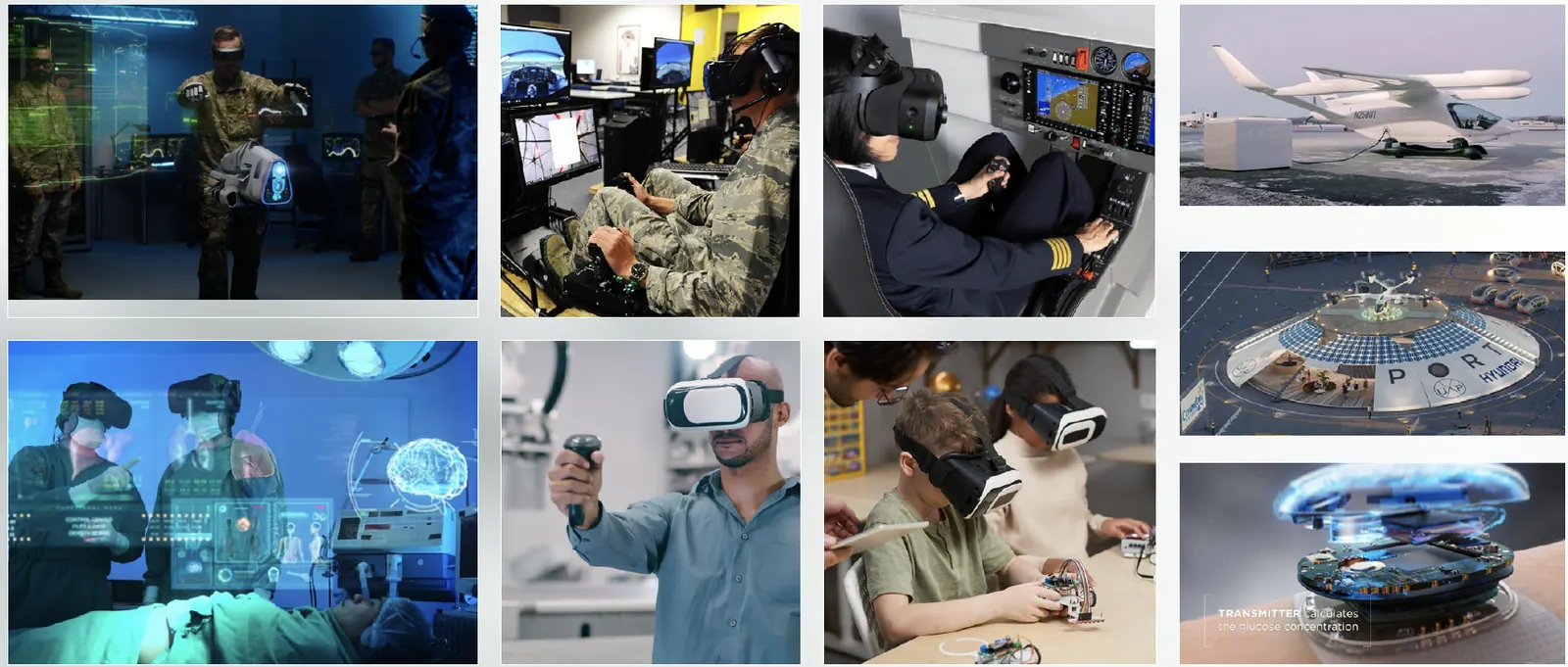
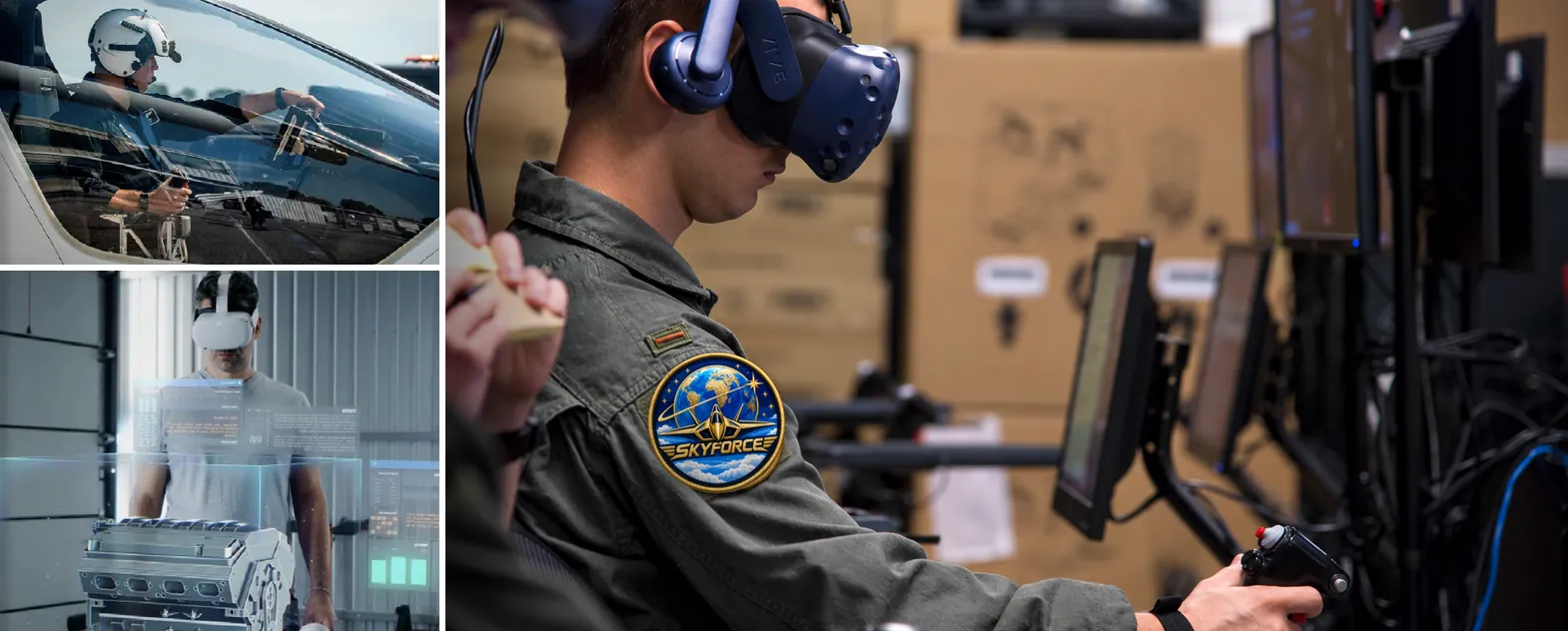
- Immersive practice: VR and AI Digital Twin training lets you rehearse procedures before touching real aircraft.
- Internships, apprenticeships and entry-level roles at manufacturers, operators and airports.
Step 4: Show Up Ready
- Resume: lead with certificates, hands-on hours and projects.
- Online presence: keep your LinkedIn profile current and share what you are learning.
- Network: industry events, professional groups and alumni of your training program.
Key takeaway
Choose a lane, earn its certificate, practice hands-on, and keep learning as the industry changes.
Action step
Join the SkyForce waiting list for the track that matches your lane.
Join the Waiting ListChapter 12 Quiz
Test Yourself
1What is the first step into an AAM career?
2How does VR and AI Digital Twin training help?
3What should a resume lead with?
Finish All 12 Quizzes
Answer every question in a chapter correctly to mark it passed. Pass all 12 to complete the course.